
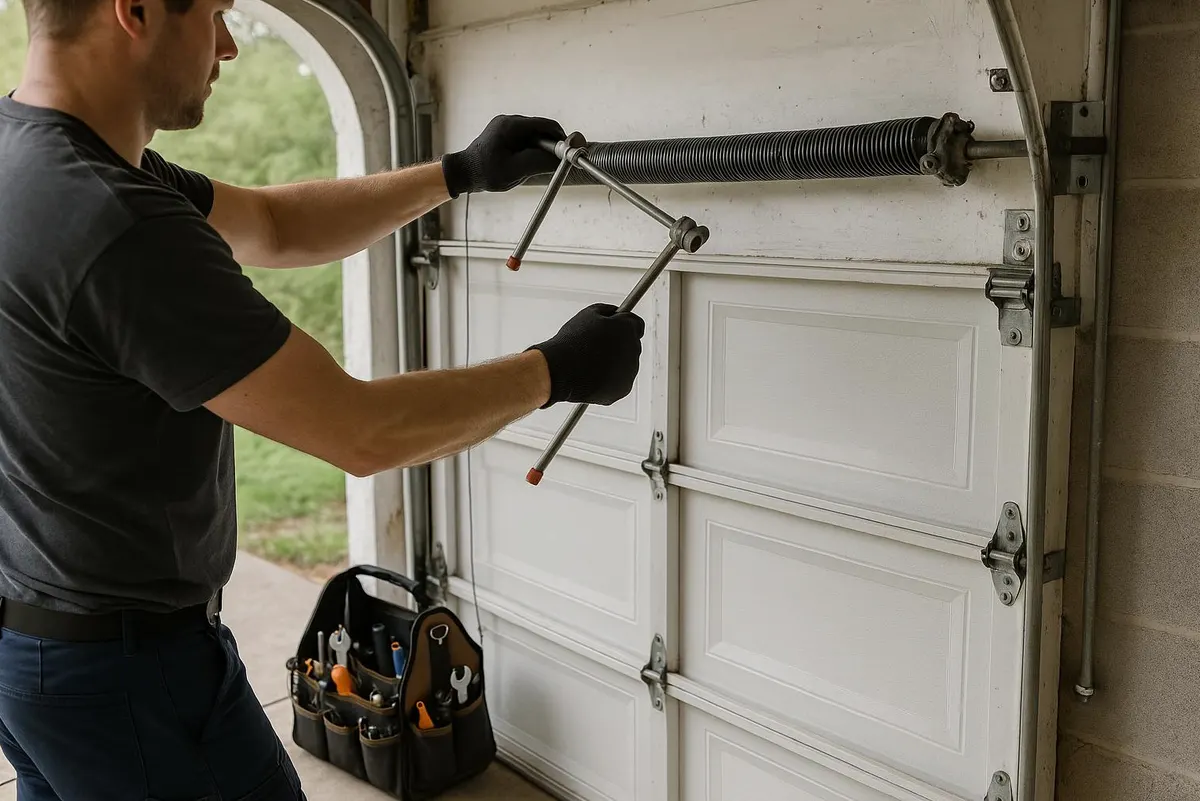
The Mistake: Trusting a Closed Door
If the garage door is down and the opener light isn't blinking, most homeowners assume the garage is secure. It's tempting to stop there — the door is heavy, it's closed, and the house feels locked up for the night. But a closed garage door and a locked garage door are not the same thing, and the gap between those two states is exactly where most break-ins happen.
How It Actually Goes Wrong
Burglars rarely force their way through a garage door panel. Steel and most wood doors are too strong, and prying one open takes time and noise most people casing a house don't want to risk. Instead, they exploit a handful of predictable weak points:
- The emergency release cord. Every garage door has a manual release lever for power outages. On many doors, there's enough of a gap at the top corner for a wire or coat hanger to reach in, hook the release cord, and pop the door open in under a minute — no alarm, no broken glass.
- Old-style remotes. Openers from before the mid-2000s often use fixed dip-switch codes instead of rolling codes. A cheap code-grabbing device can capture and replay that signal.
- Side (pedestrian) doors. A garage with a walk-in side door is only as secure as that door's lock. Many of these doors have weaker hardware than the front door of the house, and they're often overlooked.
- Garage windows. If your garage has windows, they can be broken or unlatched just like any other window, giving access to the release lever from inside.
Where Southport Weather Makes This Worse
Humidity and heavy rain through the summer can swell wood panels and warp weatherstripping, widening the gap at the top or sides of the door just enough for a hanger or pry bar to get leverage. Pine debris and grit that work into the tracks during storms can also throw a door slightly out of alignment, leaving uneven gaps instead of a tight seal. And during hurricane season, it's common to manually disengage the opener for storm prep — then forget to re-lock the door afterward, leaving it secured by nothing but its own weight.
What Actually Stops It
- Zip-tie or shield the emergency release. A simple zip tie through the release lever (positioned so it still works from inside in an emergency) blocks the hanger trick entirely. Dedicated plastic shields do the same job more cleanly.
- Upgrade to a rolling-code opener. If your opener is more than 15 years old, it's likely vulnerable to code grabbing. Modern openers generate a new code every time, making replay attacks useless.
- Add a deadbolt to the side door. Treat it like any exterior door — solid deadbolt, reinforced strike plate.
- Keep garage windows locked and covered. Frosted film or curtains also stop people from seeing tools, bikes, or an empty car that signals nobody's home.
- Use vacation or lock-out mode. Most newer openers have a setting that disables remote signals entirely — useful when you're away for an extended stretch, including storm evacuations.
- Check alignment and seals each fall. After hurricane season winds down, inspect the door for gaps, worn weatherstripping, or track misalignment before winter humidity swings settle in.
When to Call Southport Garage Door
If your opener still uses an old remote with physical dip switches, or you're not sure whether your door's emergency release is exposed, that's worth a professional look rather than a guess. We handle garage door opener repair & installation for homeowners switching to rolling-code systems, and our preventive maintenance visits include checking alignment, seals, and release hardware for exactly these vulnerabilities — the kind of thing that's easy to miss until it's a problem.
If you're in Southport, Oak Island, Shallotte, or anywhere else in Brunswick County and want a garage door that's actually as secure as it looks, give Southport Garage Door a call. We'll check your current setup and fix what needs fixing — no guesswork, no upselling you on a door you don't need.